Tuesday, March 20, 2018

7 Steps for Quick and Easy Unit Planning for Differentiation

Three years ago, I was struggling with students that moved through the content much quicker than the rest of the class. These students became disengaged and disruptive.  I had activities for them to work on if they finished early, but they did not always interest the students or keep them busy for as long as I needed them to be.  Basically, the students didn't see the value of the activities.

As a result, I created a 4 Quadrant System that allowed students to work at their own pace and stay engaged with the content. It takes some planning upfront, but once you start the unit, there is virtually no time spent on lesson plans.  The best part of this system is that it empowers students to own the learning.


Here's what I do:

1) Gather Materials

I begin by checking the standards and collecting all of the activities, student handouts, manipulatives, and videos for a given unit.

2) Organize

Next, I divide all materials into 4-5 main topics.  These topics would all fall into categories based on 1-2 related "I can" statements.  I'm a tactile person, so I like to physically make piles. You may already have this done if you keep an organized file cabinet at, binder or Google drive (and I am very jealous of you!).

3) Determine DOK or level of complexity.

Once my materials are divided into topics, I decide which activities are used to learn, practice or deepen knowledge.  These materials help me arrange the quadrants.   I put all learning and/or basic skill practice materials in Quadrant 1 (Q1), basic problem solving materials in Quadrant 2 (Q2), and Performance based assessments in Quadrant 3 (Q3).  I typically only put 1-2 materials in each quadrant, usually a video lesson and practice materials in Q1 and Q2.  Q3 is usually reserved for a more time consuming activity and therefore usually only has 1 task.

Don't worry if you have more materials you like to use, stay tuned I will get to those soon. Nothing needs to be thrown out. However, keep in mind when we say "yes" to one thing, we often have to say "no" to something else. As a teacher, I often lament eliminating somethings that I love. 

4) Choose Whole Group Activities (if you have them)

There are some activities or lessons that are best presented as a whole group. Often, these tasks require a jigsaw activity, compare/contrast lesson, introduction of a skill or process, or 4-2-1 summarizer.  Just because you are allowing students to work at their own pace doesn't mean you can't have whole group time. There are still many benefits to this teaching as long as it is not your only method.  Please these materials with the appropriate topic.

5) Find Related Extension Activities

What activities did you leave out because they are too challenging for the majority of your students?  Which ones extend beyond the required standards?  Do any of your activities introduce related topics your students will learn next year?  Those are the perfect tasks for Quadrant 4. These activities are the ones for your fast workers, gifted learners, or students seeking extension.  Try to make these tasks challenging, but not impossible, and preferably tasks the students can work on independently with little instruction from you. A short video can be used to introduce or explain the instructions to help these students work more autonomously. 

6) Make All Materials Accessible to your Students

I place all of my materials in order that I'd like my students to complete them in a list of links in a shared Google doc check out this example of my integers unit

I also copy and paste the work we I'd like my students to complete and deadlines on Blackboard.  A colleague of mine has started using the quadrant system to teach science and places all materials in her Google classroom. Choose what works best for you and what your students are most comfortable with. 

7) Print ALL Materials for the Unit

This takes some time, but the system works best if students have access to all hard copies when they need them. This just helps the unit run seamlessly and eliminates down time that often leads to behavior problems. I like to arrange each set of quadrants in packets of Q1-Q3.

I place Q4 in a folder on my board in the appropriate set of quadrants.  This is because not everyone student will complete these tasks and therefore do not need copies. It also eliminated the belief that they must complete the task especially if they are struggling with the content at grade level. 
I have detailed how I run this system in an earlier post and create keys for all quadrant work for easy checking in class.  Check out this post for more information.

I also add a set of extension quadrants at the end of each unit.  This allows the very fast processers to extend beyond the current standards.  The extension quadrants introduce topics that are not in the 6th grade standards.  They are always taken from related 7th grade standards.  Check out the set of extension quadrants I have set up for my students that complete our integers unit early.  (You are probably expecting computations with integers, but those have been added to previous units.) I place these extension tasks at the bottom of the page along with any extra web resources or games to help the students study or get extra practice as needed.

So that's it!

This whole process probably take less time than it took to write this post.  (Of course, I am a very slow writer, I'm working on it.)  Each year when I plan to begin my units, I spend 1-2 planning periods making adjustments (I also make notes on the documents throughout the unit as reminders of changes I'd like to make or make changes immediately after each unit for next year) and printing materials. With the exception of printing quizzes or tests, I typically don't visit the copier until I begin the next unit.  This super planning also reduces the stress of needing materials only to find the printer is broken.  Does this sound familiar to you?

Because my unit is already to go, I can focus time on working with students, organizing future units, or grading.  I haven't found a way to eliminate this task, but I'm working on it! I will say that I spend far less time grading than ever since introducing Quadrants to my teaching.

How do you streamline planning and save time?  Comment below.  As always, thanks for taking the time to read about my journey!  Come back soon!

Thursday, March 15, 2018

Quick Celebration of Pi Day

Pi Day is a holiday in our house.  My son was born on March 13, seven years ago, just a few hours shy of the big day.  We celebrated in the hospital with a pie as big as he was.  It was a last minute decision by my mom to purchase it and have the person at the bakery write "Happy Pi Day!" on it.

Each year, I also like to celebrate the day with my students.  I have done a variety of activities in the past, but this year's are my favorite so far.  As the students came in, they were given a half circle to decorate in any way they choose.  When they were completed, they hung them on the wall creating full circle after full circle.  It was a pretty informal activity, but the conversation about the relationship between Pi and circles was quite rich and engaging.  I found the entire activity relaxing for the students giving us pause in the middle of a rather rigorous unit, Ratios and Rates.  The whole activity took approximately 10 minutes.

I think the art has a bit of a Kandinsky feel, don't you?

Next, I had the students count off from 1 to 9 and broke them up in groups of 2-3 students.  Each group was tasked with coming up with a unique sound in one minute.  Then I explained that we were going to conduct a Pi Symphony.  I listed the following digits of Pi on the board and when I pointed to the digit numbered the same as each group, they made their sound, with 0 being a rest.  The students had a fantastic time and everyone was engaged in this activity.  Making strange sounds as loud as possible is every 6th grader's dream, right?  Here are my two favorites:


How did you celebrate Pi Day with your students?  Please share in the comment section.


Tuesday, March 6, 2018

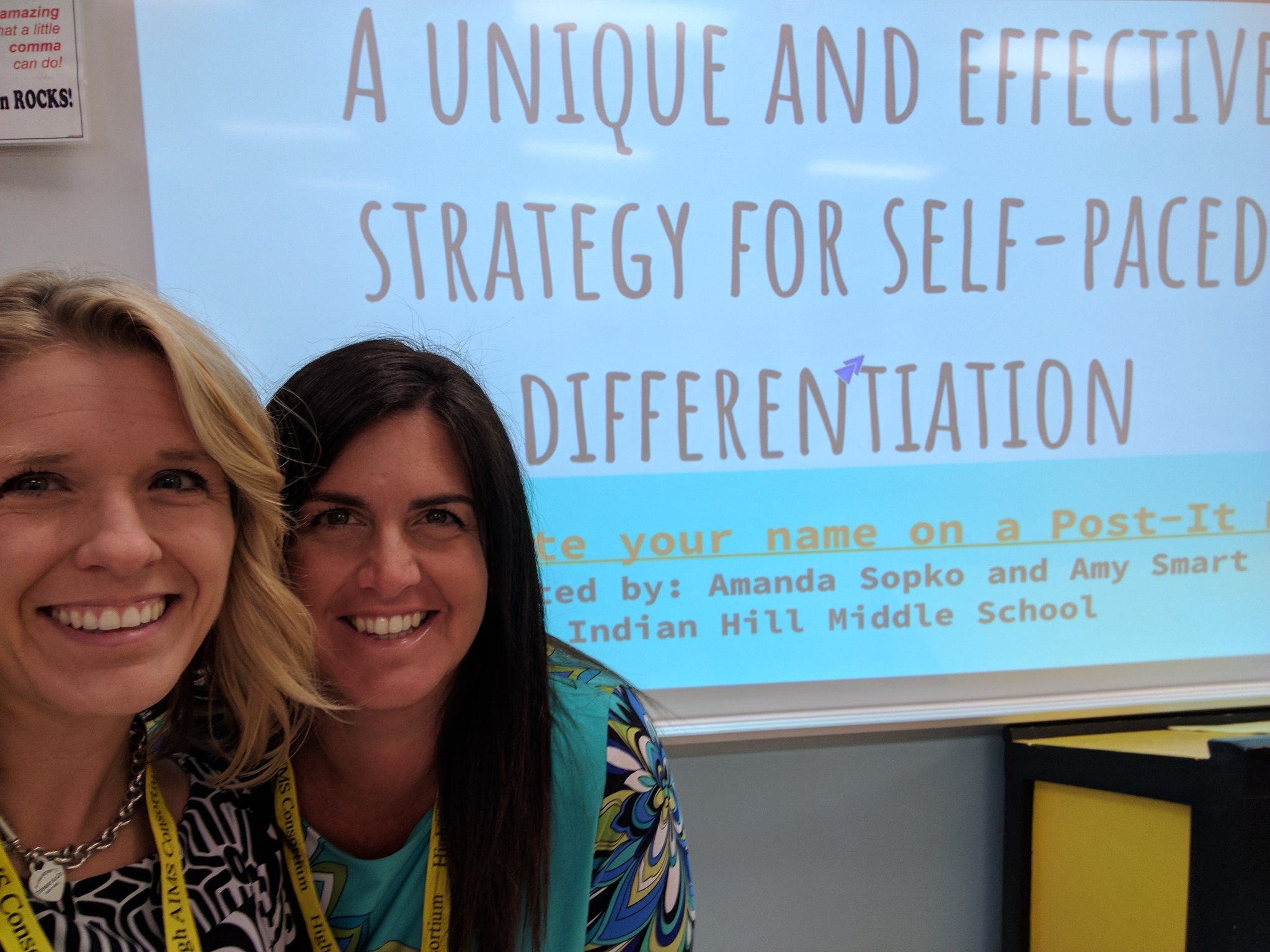
How Presenting Transforms My Teaching


I LOVE presenting!  I totally get a rush from sharing what I do in my classroom.  I don't even have to be a presenter, I just love being part of the conversation.  Every conference I present at also allows me to really dig deep into my practice and reflect on what I do, and in return, makes me a better teacher.  We know that when our students can teach each other, they truly understand the concept.  It is much the same for teacher presenters.

Every time I write a presentation proposal, I examine my practice and begin by looking for evidence that my strategy works.  It's amazing how much you can learn from this form of self-reflection.  What teachers, and I, don't always realize is that we do such great things!  When we are in the trenches day in and day out, we don't realize the ways we are revolutionizing teaching.  We don't realize the services we are providing for our students.  We need to share what we do!  It sounds corny, but it is so true!  It's got me typing in all !!!!!!

Presenting forces me to organize and share the great things I have created for my students.  More importantly, I find areas where I can improve.  When I write a proposal, I always add something new to my teaching and throw in a brief line stating that I will share outcomes of my practice.  This forces me to do something.  It's a learning experience, right?  

I love hearing how my presentations have impacted other teachers.  The feedback I get from participants, good or bad, always forces me to re-examine what I present and I always change or tweak my practice.  As I type this post, I am preparing for a presentation tomorrow to a group of graduate students working towards their Gifted Endorsement.  I am so excited to share with them and hopefully be a champion for differentiation.

The first time I presented, Student Math Portfolios, I was terrified, and alone.  I didn't know if what I had to say would be useful to anyone.  When I got into the room, I was so surprised to see people actually wanted to attend my session.  There were a few people at first, but by the time my presentation began, it was standing room only!  It was exhilarating and overwhelming.  I was told to prepare for 30 attendees, and being the over-prepared teacher I am, I printed 50 copies of my handout.  I don't know how many people actually attended, but I ran out of handouts and had to promise to email copies to those who did not receive one.


After that, I try to bring my inspirations along for the ride.  Presenting is always better with a friend, and I have some of the greatest to choose from.  Not only is it great to have someone to share the jitters with, but having another person to ask the tough questions before the presentation is another great way to process your information. I highly recommend using the buddy system when presenting, especially for the first time. 

The best part of being a presenter is that you also get to be a learner.  Since you are at the conference, you may as well attend a few sessions.  Once again, you learn something new to tweak your practice.  

I never thought I had anything important to say.  It's what took me so long to begin this blog.  But we all have something great to say.  Please find something, anything, that you are doing in your class that highlights your awesome and share it with the world.  If you can't think of anything, ask a student or colleague, I'm sure they can help you out.  Still can't think of anything great to share?  Maybe it's time to make a change...


Saturday, March 3, 2018

9 Growth Mindset Picture Books for the Middle School Math Class

This year, I've started Mindset Monday.  In the past year, I've read Mindsets: The New Psychology of Success by Carol Dweck, Mathematical Mindsets by Jo Boaler, and The Growth Mindset Coach by Annie Brock and Heather Hundley.  These books really challenged my thinking and sparked my creativity in introducing and teaching the growth mindset in my own classroom.

Here's what I do:
Every Monday Morning, we spend the first 10 minutes of class discussing Growth Mindset.  It doesn't always look the same, because students don't all learn the same way.  Sometimes, we watch a YouTube video related to developing, learning about, or thinking about growth mindset (there are so many to choose from).  Other days, we involve some art, collaborative discussion, movement activity, or goal setting/reviewing/revising.

We will see how/if this will increase learning and test scores at the end of the year, but I have noticed a huge difference in my students' attitudes towards math this year.  I have more students than ever that telling me math is their favorite subject!  In my earlier post, Creating a Self-Paced Math Classroom, I highlight the culture I have created that allows students a lot of time to play with math ideas.  While they are working, I have noticed that many of my students have taken the growth mindset to heart and remind their peers of these ideas while working through their productive struggle.  It is not uncommon for students to change their peer's comments by throwing in a "yet" after comments like, "I can't get this".  One students even calls me Mrs. Yet, I love it!

My personal favorite days, however, are reading a picture book to my 6th graders.  Even though they are big bad middle schoolers now, they still really LOVE being read to, especially picture books.  Below, I have listed my favorite books and short activities or classroom lesson this book lead to for the day (spoiler alert, many of these books lead to STEM lessons), I have done to support each lesson.

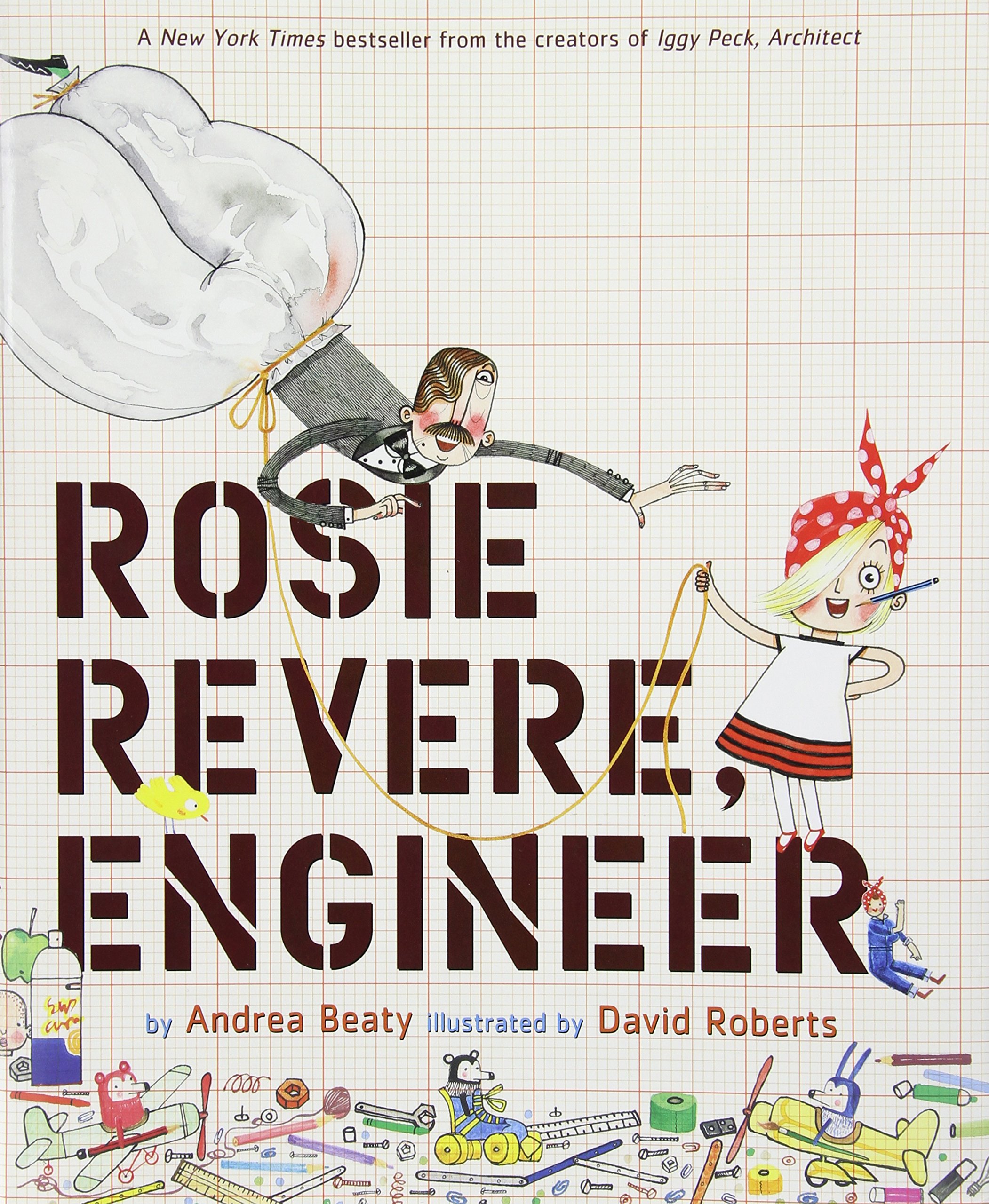
Rosie Revere, Engineer

Image result for rosie revere
This is one of my favorites for so many reasons; strong female characters, engineering theme, failing forward...  I can go on an on.  I read this book early in the year and have students do a 4-2-1 Summarizer (we skip the paragraph part to save time, and conduct a class discussion instead) to determine the theme.  Then each group writes their final summary on a large piece of poster board to hang in our classroom as a reminder.

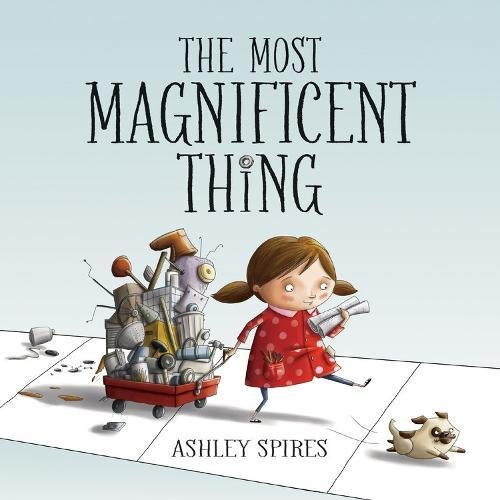
The Most Magnificent Thing
Image result for the most magnificent thing

I LOVE to read this one before our students' first STEM challenge of the year.  It really highlights the importance and learning that comes from the iterative process of design, create, try it out, make it better.  I also LOVE the discussion of how the end product does not need to look exactly like you imagine to be magnificent. (Also, discussion on keeping calm when frustration comes knocking.) So many awesome topics of discussion from this book!

Can I Play Too?
Image result for can i play too amazon

Another great read to introduce before beginning a STEM challenge.  These lovable characters learn to deal with challenging constraints to create a fun outcome.  We discuss the negative effects of holding on to ideas that do not work and ways to think outside the box and be flexible with your problem solving (which also relates to math class).  Also a great read for developing the importance of perseverance.

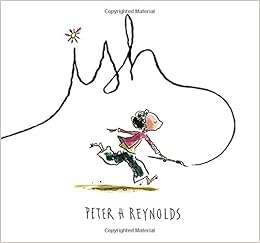
Ish
Image result for ish amazon

I love that this book allows students to find the beauty in everything, even the imperfect.  It is also a great time to discuss building up words (with each other and yourself).  We like to listen to the songs, The Power of Yet and Who Says during our work time, everyday, and particularly after reading this book.

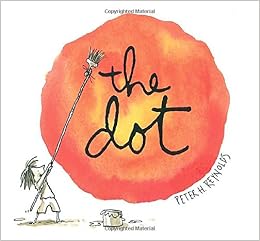
The Dot
Image result for the dot amazon book
this is such a sweet book about a very discouraged girl.  We like to discuss creative thinking and looking at a problem from multiple angles.  I follow up with a multiple problem solving activity for students to work on during class.  We also talk about building up others when they are struggling or asking a friend for a different perspective when stuck.  Creative problem solving

Your Fantastic Elastic Brain
Image result for your fantastic elastic brain amazon book

This is another great read for the beginning of the year.  I also use a lot of YouTube videos to introduce what happens to you brain during productive struggle.  We discuss synapses that fire when we make mistakes and how our brain grows.  I refer back to this all the time throughout the year, and celebrate my own mistakes saying, "Oh yeah!  Synapses firing!" and make a gesture to my growing brain.  My favorite part is when the students say it to each other.

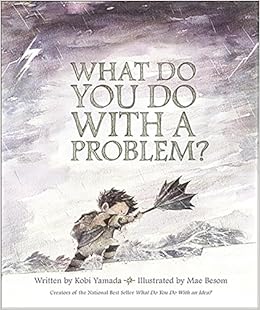
What Do You Do With a Problem
Image result for what do you do with a problem amazon book

This is a great one to read and refer back to Your Fantastic Elastic Brain, our brain grows when we try something scary.  We reflect on a fear we are currently facing and what we can do to tackle it head on.  Students write their fear and share them with a partner.  I also like to read this book when we are in the middle of learning a particularly challenging topic.  We discuss the happiness and beauty we will find in the math once we master the concept (then you need to make sure all students master something that day).

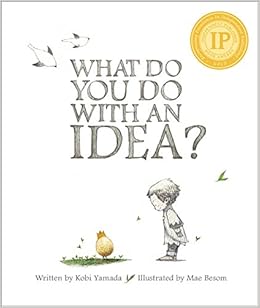
What Do You Do With an Idea
Image result for what do you do with an idea amazon book
I read this book towards the end of the year when introducing our robotics or passion projects.  It is also a great book to read when introducing our class Makerspace.  We discuss the importance of exploring our ideas, even the crazy ones.

This book is also great to read when the students are working on designs for their STEM challenges.  We have created a culture of sharing all ideas, even the crazy ones because you never know when/if you might need to fall back on the design or an aspect of it after they've tried all of the safe or traditional ones.

The Girl Who Never Made Mistakes
Image result for the girl who never made mistakes amazon book

I teach a lot of students dealing with perfectionism.  STEM challenges are a great way to allow students to experience failure in a safe environment.  We find the beauty and learning that comes from making mistakes and the freeing feeling you get after making one.  I like to give my students a challenge early in the year that they will fail at.  I start my follow up discussion with, OK, we've got that out of the way, now let's begin learning.  We point out the learning we gain from making mistakes and the freedom we have moving forward after it is over.  Mistakes allow us to feel more open to trying new things and give us a more fun and fulfilling life.

Books are such a fantastic way to introduce new concepts and deal with social-emotional topics with students.  What are your favorite growth mindset picture books to use in your class?  Have you tried any of the ones above?  What have you done with your students as a follow up?  Please share below, and thanks for all you do to help your students develop a growth mindset!